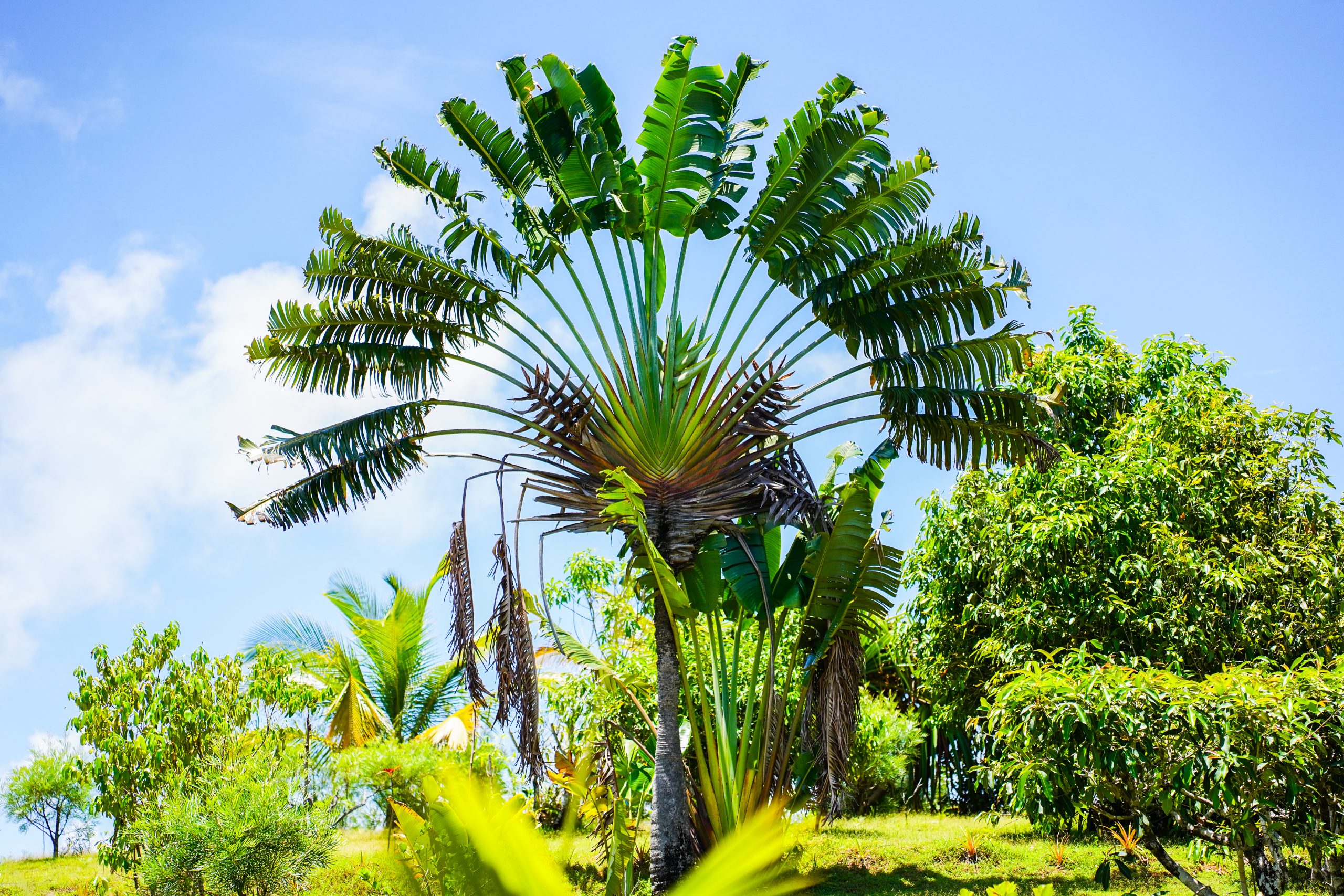
When you imagine Madagascar, chances are the image of the striking Ravinala, or Traveller's Palm, comes to mind. This unique and majestic plant is a true symbol of the island nation, instantly recognizable by its fan of leaves. And if you're planning a trip to the peaceful paradise of ile aux Nattes, you're in for a treat, as Ravinala is a common and captivating sight on this magnificent ile.
Despite its common name and palm-like appearance, Ravinala madagascariensis is not actually a palm at all. It belongs to the Strelitziaceae family, which makes it a close relative of the bird-of-paradise flower. This fascinating botanical fact is only the beginning of the allure that surrounds this emblematic plant.
Why "Traveller's Palm"?
The name "Traveler's Palm" comes from the legend that the leaf sheaths hold rainwater, providing a refreshing drink for thirsty travelers. While this is true to some extent, relying on Ravinala for hydration isn't always practical or safe. However, the plant's tendency to grow with its fan oriented roughly east-west, supposedly acting like a natural compass, also contributes to its name.
Ravinala on ile aux Nattes : Omnipresent beauty
As you explore the sandy paths and lush interiors of l'ile aux Nattes, you'll be constantly greeted by the elegant silhouette of the Ravinala tree. Its symmetrical, fan-shaped leaves create a striking visual contrast against the backdrop of turquoise ocean and verdant vegetation. You'll find them here:
- Beachside: Ravinala thrives in the tropical climate of l'ile aux Nattes, often growing along the shores of the ile's pristine beaches, offering dappled shade.
- Dotting the landscape: Venture inland and you'll see them scattered all over the ile, adding a touch of exotic beauty to the landscape.
- A symbol of welcome: Ravinala is often planted near accommodation and villages on ile aux Nattes, serving as a natural emblem of the ile's welcoming atmosphere.
More than just a pretty face: Ravinala uses
Beyond its aesthetic appeal, Ravinala has several practical uses for the inhabitants of Madagascar, including those of ile aux Nattes:
- Roofing material: Large sheets are commonly used to cover the roofs of traditional houses, offering excellent protection against the elements.
- Water source (historically): As mentioned, leaf sheaths can hold water, although this is more of a historical use and not a primary water source today.
- Food source: Young shoots and seeds are edible, although not a staple food.
- Ornamental plant: Ravinala is increasingly grown as an ornamental plant in Madagascar and around the world, prized for its unique shape.
Discover Ravinala on your trip to ile aux Nattes :
Your trip to l'ile aux Nattes won't be complete without fully appreciating the beauty and significance of Ravinala. Here are just a few ways to discover it:
- Photography: Capture the striking form of the Ravinala on the magnificent backdrops of ile aux Nattes.
- Observe its growth: notice how the leaves unfurl and how the plant soars skyward.
- Learn from the locals: Ask the inhabitants of ile aux Nattes about the uses and cultural significance of Ravinala.
- Simply admire: Take a moment to appreciate the unique beauty of this iconic plant as you explore the ile.
The Ravinala is more than just a plant; it's a symbol of Madagascar's unique identity and a defining element of the landscape of the ile aux Nattes. Its elegant shape and fascinating history make it a must for every visitor to this enchanting ile . So, as you stroll along the shores of ile aux Nattes, take a moment to admire the majestic Palmier du Voyageur - a true icon of Madagascar.