
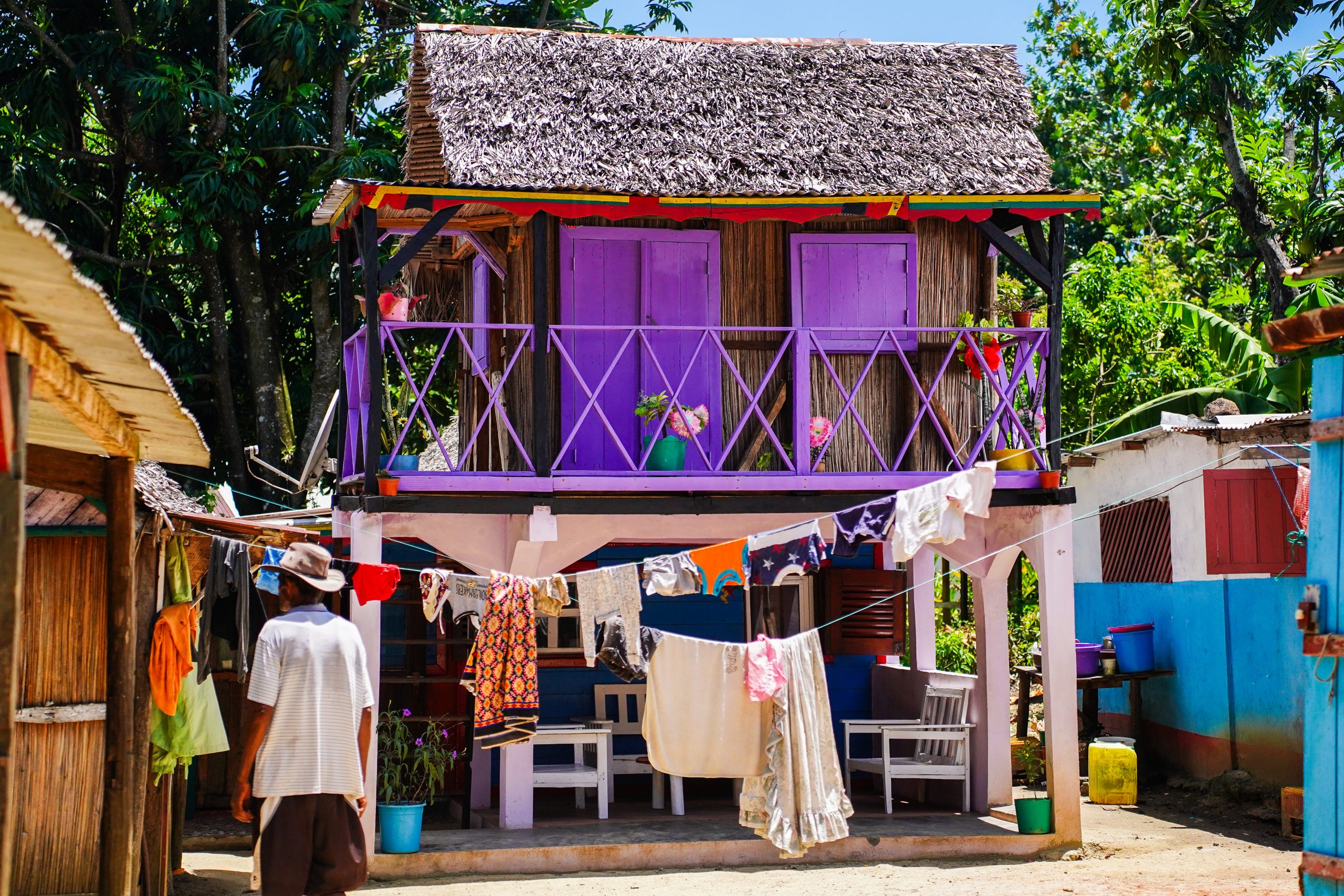
ile aux Nattes may be a tranquil island paradise today, but its history is woven with threads of exploration, trade and even piracy. This small ile, nestled just off the southern tip of Sainte-Marie, has a fascinating history that adds a new layer of intrigue to its natural beauty.
First inhabitants and exploration :
Like most of Madagascar, l'ile aux Nattes was probably first inhabited by Austronesian peoples who arrived by sea centuries ago. These early settlers would have lived in harmony with the ile's resources, relying on fishing and small-scale agriculture.
The arrival of European explorers in the 16th and 17th centuries marked an important turning point in the ile's history. Portuguese, Dutch and French ships, in search of trade routes and resources in the Indian Ocean, began to chart Madagascar's coastline. ile aux Nattes, with its strategic position near Sainte Marie, became a familiar landmark and potential stopover for these early voyages.
A haven for pirates:
In the 17th and 18th centuries, the waters around Sainte-Marie and ile aux Nattes were reputed to be a haven for pirates.2 The sheltered bays and coves provided ideal hiding places for ships, and the ile 's proximity to trade routes made it a strategic location for attacking ships carrying spices, silks and other valuable goods.
Legend has it that ile aux Nattes itself served as a small base or outpost for these pirates, perhaps offering a more isolated refuge than the larger Sainte-Marie. Although there is less concrete evidence of pirate settlements on ile aux Nattes than on Sainte-Marie, the ile 's proximity and geography suggest that it played a role in this era of cloak-and-dagger.
French influence and the colonial era :
At the end of the 19th century, France officially colonized Madagascar, placing l'ile aux Nattes under its administration, like the rest of the ile. The French influence is still visible in the architecture and the use of the French language, although Malagasy remains the main language.
During the colonial period, l'ile aux Nattes remained a relatively quiet and undeveloped ile , essentially focused on fishing and small-scale agriculture. Its isolation probably helped preserve its natural beauty and traditional way of life.
Towards independence and modern times:
Madagascar gained independence from France in 1960, and l'ile aux Nattes became part of the newly-formed nation.3 In the decades that followed, the ile slowly began to open up to tourism, attracted by its pristine beaches, tranquil atmosphere and proximity to whale-watching opportunities around Sainte Marie.
However, development on l'ile aux Nattes has remained relatively low-key, preserving its ile charm and preventing the kind of large-scale tourism seen in other destinations. This has enabled the ile to retain much of its traditional character and natural beauty.
L'ile aux Nattes today: A blend of past and present:
Today, l'ile aux Nattes is a popular destination for travelers seeking an authentic, relaxing Malagasy experience. Although tourism is an important part of the economy, the ile retains strong links with its past. The traditional pirogues that dot the waters, the stories passed down from generation to generation and the enduring link with the sea are all echoes of its history.
The history of l'ile aux Nattes, from its earliest settlers to its days as a potential pirate outpost and its quiet evolution into a sought-after travel destination, adds depth and intrigue to the ile's current appeal. As you wander its sandy paths and soak up its tranquility, take time to appreciate the whispers of the past that have shaped this enchanting ile .